Foley 101 · Part 2 of 3
Foley vs Sound Effects
They work side by side in every soundtrack, but they come from different places. Where one ends and the other begins.
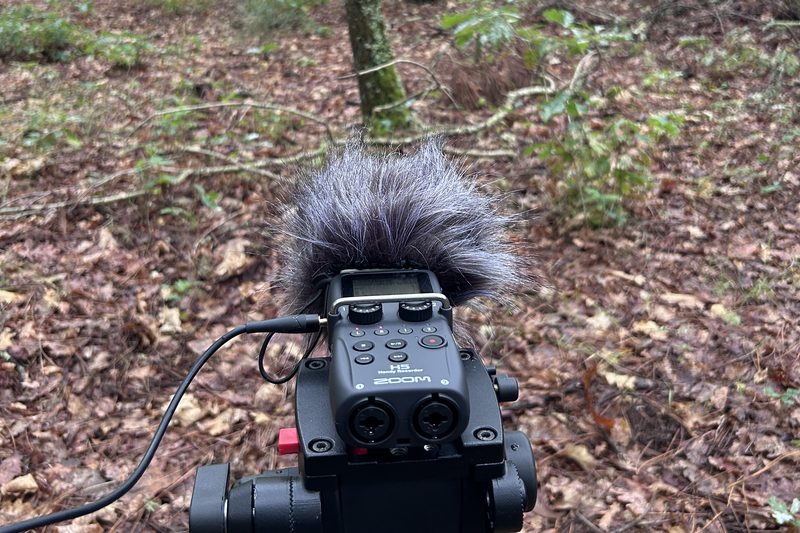
At the end of a film, the credits often list “Foley” and “sound effects” separately, sometimes with different teams. From the outside, the difference isn’t obvious. Both are sounds that aren’t dialogue or music. The real difference is in how they’re made and what they’re for.
The short version
Foley
Performed specifically to picture.
- Created for the movements on screen
- Footsteps, clothing, props, body movement
- Shaped by a character’s timing and intention
Sound effects
Recorded or designed sounds that build the wider world.
- Library sounds and field recordings
- Ambiences, vehicles, impacts, explosions
- Designed effects that don’t exist in real life
Foley: sound that follows a person
Foley is recorded while watching the scene, so it follows exactly what the actors do. If someone hesitates before picking up a glass, the Foley hesitates too. If they walk faster when they’re angry, so do the footsteps.
That’s why Foley artists talk about performing rather than recording. The sound belongs to one body, in one moment.
Sound effects: sound that builds the world
Sound effects (often shortened to SFX) cover everything around and beyond the characters. They come from sound libraries, from field recordings made for the project, or from sound design done in the edit. Roughly, they fall into three groups:
- Hard effects
- Specific sounds tied to something on screen: a car passing, a train, a gunshot, a door slamming. Sometimes called spot effects.
- Ambiences
- The air of a place: traffic, birds, a distant city, the hum of an office. Also called backgrounds.
- Designed effects
- Sounds built from layers, often for things that don’t exist: a creature, a spaceship, a moment of magic.
Same action, different approach
Take a simple moment: a character walks into a room and closes the door behind them. Both sides have work to do.
Foley
- The footsteps up to the door
- The hand on the handle, the latch
- The coat moving as they turn
- The door’s push and contact, if it’s close and gentle
Sound effects
- A heavier slam, if the scene calls for one
- The corridor’s ambience, then the room’s
- The outside world dropping away as the door shuts
- Any change of space or reverb between the two
Who covers the door itself depends on the project. A quiet, close door is often performed on the Foley stage, because it has to match a hand. A big slam might come from the effects side. Usually it’s decided between the teams, scene by scene.
Where they overlap
In practice the line moves. On a small film, the Foley artist may end up covering sounds that a bigger production would hand to effects. On another, an effects editor may cut a few prop sounds from a library because the moment is tiny or off-screen.
Foley recordings can also become raw material for sound design. A leather jacket twisting close to the mic might end up inside a creature’s movement, and a handful of gravel can become part of a landslide.
I’ve worked on projects where some sounds could easily have been effects, especially gore and creatures. I like doing that kind of thing in Foley: breaking a sound down and working out how to build it. When there isn’t enough time, though, some of it ends up replaced with effects.
Why the difference matters
For a director or picture editor, knowing the difference helps with planning. Foley is performed to the edit, so it’s usually recorded when the edit is final, or nearly. If the cut changes afterwards, the Foley has to be moved or recorded again. Effects work can often start earlier.
It also matters for international versions. Foley and effects together make up much of the M&E, the music and effects mix used when a film is dubbed into another language. If something is missing there, it’s missing in every dubbed version.
Next in Foley 101: how Foley is actually recorded.